
Does TDEE Change as You Lose Weight? 2026 Guide

Last updated: March 2, 2026
Embarking on a weight loss journey is a significant undertaking, and a common question that arises for many individuals is: does TDEE change as you lose weight? The straightforward answer is yes, your Total Daily Energy Expenditure (TDEE) absolutely changes as you lose weight. This shift is a fundamental aspect of human physiology and directly impacts how your body burns calories, making consistent adjustments to your intake crucial for continued progress. Understanding this dynamic is key to overcoming plateaus and achieving sustainable results in 2026 and beyond.
Key Takeaways
- TDEE Decreases with Weight Loss: As your body mass reduces, your Total Daily Energy Expenditure (TDEE) naturally declines because a smaller body requires less energy to function and move.
- BMR is the Primary Driver: Your Basal Metabolic Rate (BMR), the largest component of TDEE, directly correlates with body weight; losing weight lowers your BMR.
- NEAT and EAT Adjust: Non-Exercise Activity Thermogenesis (NEAT) and Exercise Activity Thermogenesis (EAT) may also decrease due to less energy expenditure for movement or potential fatigue from dieting.
- Metabolic Adaptation Plays a Role: Beyond simple size reduction, metabolic adaptation (or “adaptive thermogenesis”) can further lower TDEE by reducing energy-intensive processes, making weight loss more challenging.
- Regular Recalculation is Essential: To avoid plateaus and ensure continued progress, you must regularly recalculate your TDEE and adjust your calorie intake.
- Focus on Body Composition: Maintaining muscle mass during weight loss can help mitigate the drop in TDEE, as muscle is more metabolically active than fat.
- Be Patient and Consistent: Weight loss is not linear. Understanding TDEE changes helps manage expectations and stay motivated through periods of slower progress.
- Consider a Diet Break: Strategically increasing calorie intake for short periods can sometimes help reset metabolic adaptations and improve adherence.
Quick Answer
Yes, your Total Daily Energy Expenditure (TDEE) decreases as you lose weight because a smaller body requires less energy to maintain its functions and move. This reduction is primarily driven by a lower Basal Metabolic Rate (BMR) and can be further influenced by metabolic adaptations, necessitating regular calorie intake adjustments to continue losing weight.
How Does TDEE Change as You Lose Weight?
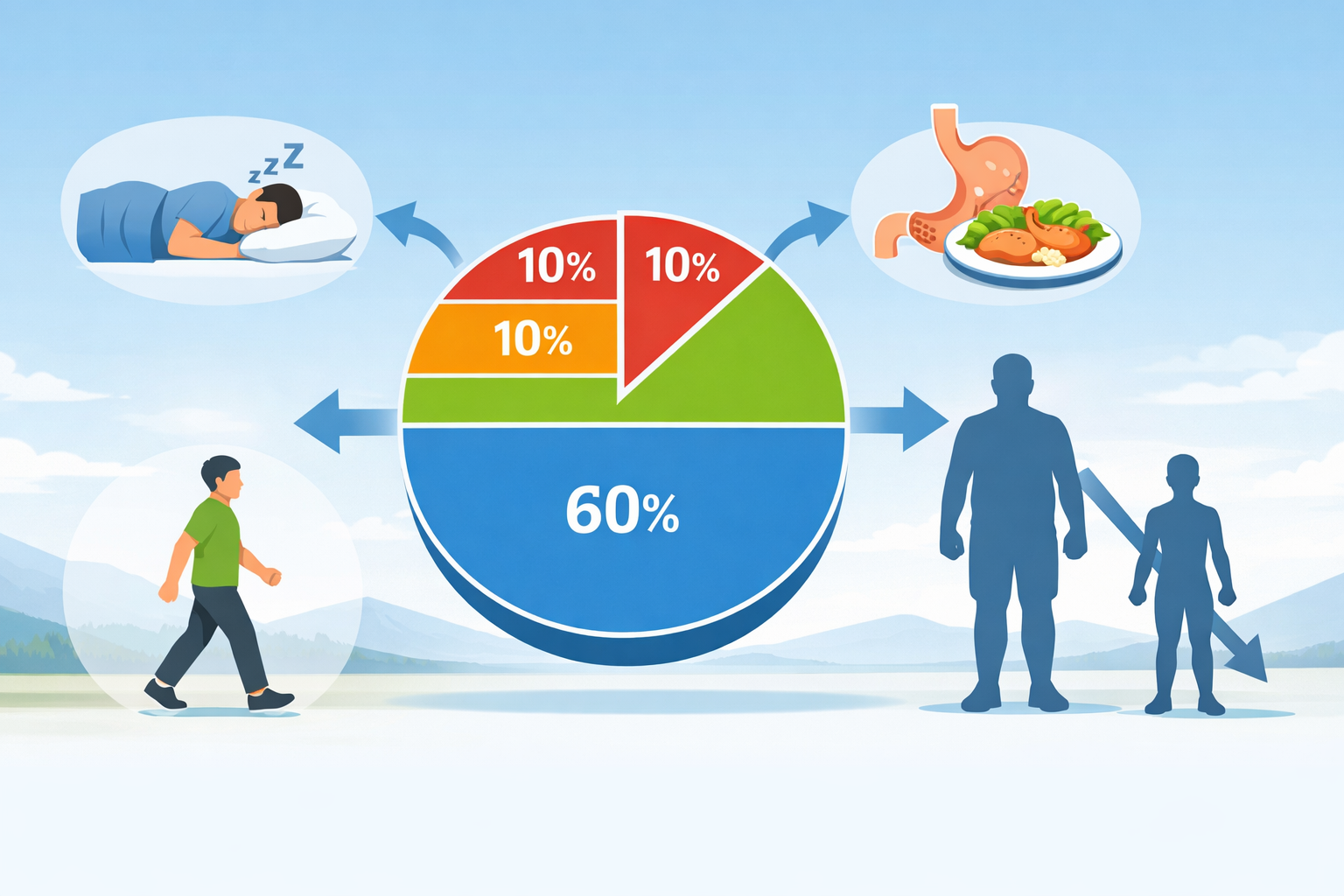
Your TDEE decreases as you lose weight primarily because a smaller body requires less energy to perform its basic functions and move throughout the day. This reduction in energy needs is a natural physiological response, meaning the caloric deficit that initially led to weight loss will eventually need to be adjusted downward to continue seeing results.
When you lose weight, several factors contribute to this overall reduction in TDEE:
- Reduced Basal Metabolic Rate (BMR): Your BMR is the number of calories your body burns at rest to maintain vital functions like breathing, circulation, and cell production. A larger body has more cells, organs, and tissue to maintain, thus requiring more energy. As your body mass decreases, so does the absolute amount of energy needed for these fundamental processes. This is the most significant factor impacting your TDEE reduction. For instance, someone weighing 200 pounds will have a higher BMR than the same person at 150 pounds, assuming similar age, sex, and body composition.
- Lower Energy Expenditure for Movement: A smaller body requires less energy to move. Whether you’re walking, running, or performing daily tasks, the caloric cost of these activities is lower when you weigh less. Imagine carrying a 50-pound backpack all day versus no backpack at all – the effort, and thus the calories burned, is significantly different. This applies to both structured exercise (Exercise Activity Thermogenesis, EAT) and unstructured daily movement (Non-Exercise Activity Thermogenesis, NEAT).
- Potential Decrease in NEAT: As you diet and lose weight, some individuals may unconsciously reduce their Non-Exercise Activity Thermogenesis (NEAT). This can manifest as less fidgeting, taking fewer steps, or generally moving less throughout the day without realizing it. The body conserves energy when in a caloric deficit, and reducing spontaneous movement is one way it does this.
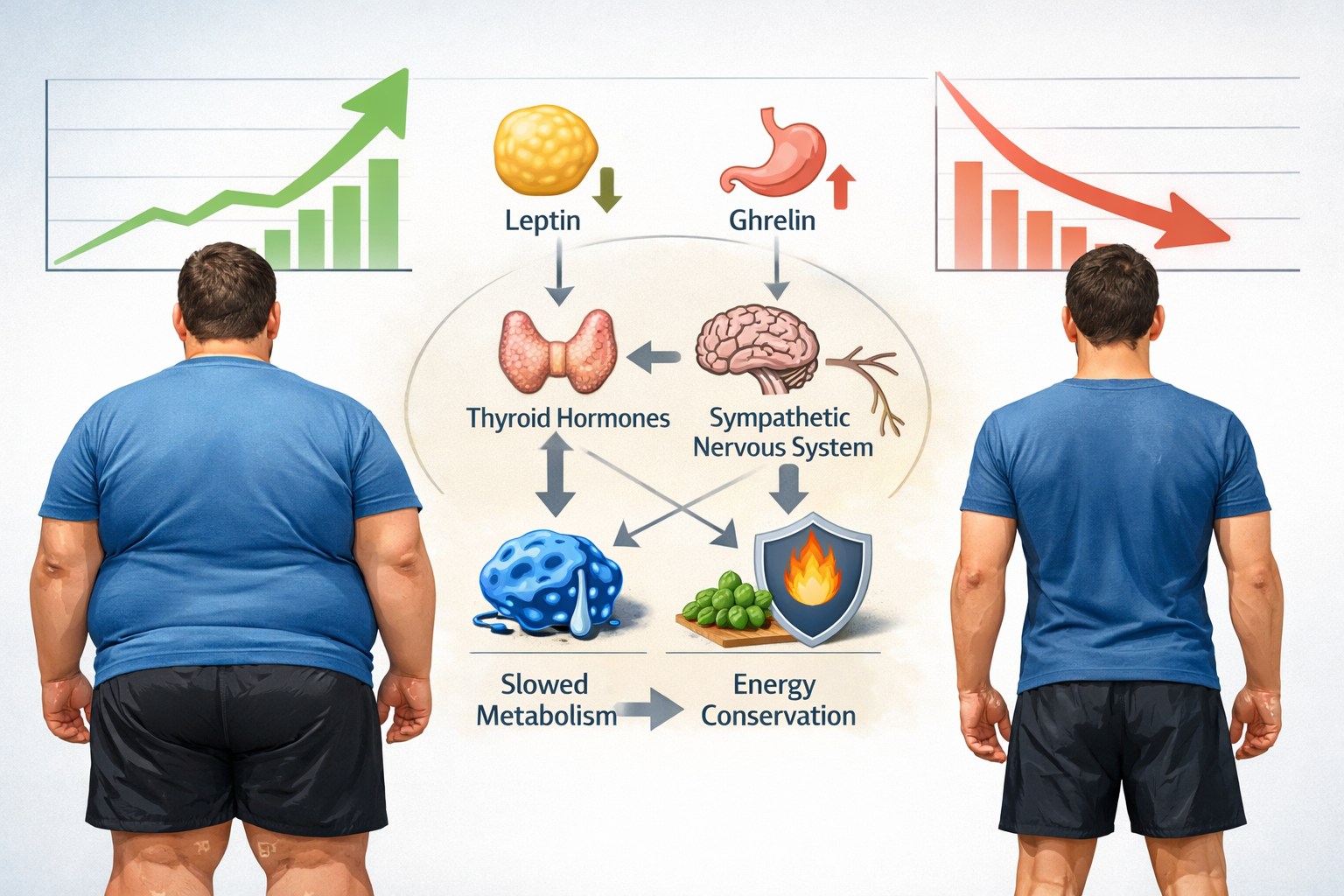
- Metabolic Adaptation (Adaptive Thermogenesis): Beyond the simple reduction in body mass, your body can undergo metabolic adaptation, often referred to as “adaptive thermogenesis.” This means your body becomes more efficient at using energy, and your metabolism slows down more than what would be predicted purely by your change in body size. This is a survival mechanism where the body attempts to resist further weight loss by reducing energy expenditure in various processes, including thyroid hormone production and sympathetic nervous system activity. This can lead to a state where your body burns fewer calories than expected even at a given body weight, making further weight loss challenging. This phenomenon is often why individuals experience weight loss plateaus.
Decision Rule: If your weight loss has stalled despite consistent effort, it’s highly likely your TDEE has decreased, and you need to adjust your calorie intake or activity levels.
Why Does Your Metabolism Slow Down When You Lose Weight?
Your metabolism slows down when you lose weight primarily due to two interrelated factors: a reduced body mass directly lowers your basal metabolic rate, and your body actively adapts to conserve energy in response to a calorie deficit. This metabolic slowdown is a protective evolutionary mechanism, making continued weight loss progressively harder.
Let’s break down the mechanisms behind this metabolic slowdown:
1. Reduced Body Mass and Energy Requirements
- Fewer Cells to Maintain: The most straightforward reason your metabolism slows is that there’s simply less of you. Every pound of body tissue, whether muscle or fat, requires calories to maintain. When you lose weight, you have fewer cells, less organ mass, and a smaller overall surface area, all of which translate to a lower energy requirement for basic bodily functions.
- Decreased Workload for Organs: Your heart doesn’t have to pump as hard to circulate blood through a smaller body, and your lungs don’t have to work as hard to oxygenate less tissue. These subtle reductions in organ workload contribute to a lower overall BMR.
2. Metabolic Adaptation (Adaptive Thermogenesis)
This is a more complex and often frustrating aspect of weight loss, explaining why your TDEE shifts beyond what simple equations predict.
- Hormonal Shifts:
- Leptin: Leptin is a hormone produced by fat cells that signals satiety and energy status to the brain. As you lose fat, leptin levels drop. Lower leptin signals to your brain that energy stores are low, prompting your body to reduce energy expenditure and increase appetite.
- Thyroid Hormones: Thyroid hormones (T3 and T4) play a crucial role in regulating metabolic rate. During prolonged calorie restriction, the body may reduce the conversion of T4 (less active) to T3 (more active), thereby lowering overall metabolic output.
- Ghrelin: Ghrelin, the “hunger hormone,” typically increases when you’re in a calorie deficit, stimulating appetite. However, it can also influence energy expenditure, with higher levels potentially contributing to metabolic slowing.
- Insulin: As you lose weight and become more insulin-sensitive, insulin levels might drop, which can also influence metabolic rate.
- Sympathetic Nervous System (SNS) Activity: The SNS is responsible for your “fight or flight” response and influences energy expenditure. During weight loss, SNS activity may decrease, leading to reduced thermogenesis (heat production) and lower resting energy expenditure.
- Increased Metabolic Efficiency: Your body becomes more efficient at using the calories it consumes. This means that for the same amount of activity, or even at rest, it burns fewer calories. This can involve changes at a cellular level, such as alterations in mitochondrial function.
Common Mistake: Many people assume their TDEE remains constant, leading them to consume the same number of calories that initially led to weight loss. This is a primary reason for getting stuck while eating in a deficit.
The Components of TDEE and How They Are Affected by Weight Loss
Understanding how does TDEE change as you lose weight requires examining its individual components: Basal Metabolic Rate (BMR), Non-Exercise Activity Thermogenesis (NEAT), Exercise Activity Thermogenesis (EAT), and the Thermic Effect of Food (TEF). Each component is influenced by a reduction in body mass and metabolic adaptation.
Here’s a breakdown:
1. Basal Metabolic Rate (BMR)
- Definition: BMR is the energy required to maintain essential bodily functions at rest (e.g., breathing, circulation, body temperature regulation, cell growth). It accounts for the largest portion of your TDEE, typically 60-75% for most individuals.
- Effect of Weight Loss: BMR directly decreases with weight loss. A smaller body has less tissue to maintain, requiring fewer calories. This reduction is linear; as your body mass shrinks, your resting energy needs go down proportionally.
- Mitigation: Maintaining or building muscle mass during weight loss can help mitigate the drop in BMR, as muscle tissue is more metabolically active than fat tissue.
2. Non-Exercise Activity Thermogenesis (NEAT)
- Definition: NEAT encompasses all the calories burned from movement that isn’t formal exercise. This includes fidgeting, standing, walking around the house or office, typing, gesturing, and maintaining posture.
- Effect of Weight Loss: NEAT can decrease in two ways:
- Lower Caloric Cost per Movement: As you weigh less, the energetic cost of performing any given movement is reduced. For example, walking a mile at 150 pounds burns fewer calories than walking a mile at 200 pounds.
- Unconscious Reduction in Movement: When in a caloric deficit, your body may subconsciously reduce NEAT to conserve energy. You might find yourself fidgeting less, choosing to sit more often, or taking fewer spontaneous walks, even if you don’t intentionally decide to.
- Mitigation: Actively trying to maintain or increase NEAT can be beneficial. Set a daily step goal, take the stairs, stand more often, and incorporate short walks throughout your day.
3. Exercise Activity Thermogenesis (EAT)
- Definition: EAT refers to the calories burned during structured, intentional physical activity, such as going to the gym, running, cycling, or playing sports.
- Effect of Weight Loss: Similar to NEAT, the caloric cost of performing a specific exercise decreases as you lose weight. A 150-pound person burns fewer calories running a mile than a 200-pound person does, assuming the same pace and terrain.
- Mitigation: To maintain EAT, you might need to increase the duration, intensity, or frequency of your workouts as you lose weight. Focusing on resistance training can also help maintain muscle mass, further supporting overall energy expenditure.
4. Thermic Effect of Food (TEF)
- Definition: TEF (also known as Dietary Induced Thermogenesis) is the energy required to digest, absorb, and metabolize the food you eat. It typically accounts for about 10% of your total caloric intake.
- Effect of Weight Loss: As you lose weight, you generally reduce your overall caloric intake. Since TEF is a percentage of the calories consumed, a lower food intake will naturally lead to a lower absolute TEF. Additionally, if you lose a significant amount of metabolically active tissue, your body’s processing efficiency might slightly increase, further reducing TEF.
- Mitigation: Prioritizing protein intake can help. Protein has a higher TEF (20-30%) compared to carbohydrates (5-10%) and fats (0-3%), meaning your body burns more calories digesting protein. This is one reason why high-protein diets are often recommended for weight loss.
Quick Example:
Let’s say a 200-pound person has a TDEE of 2800 calories. After losing 50 pounds, now weighing 150 pounds, their new BMR will be significantly lower. If their activity level remains the same, their TDEE might drop to 2200-2300 calories. This means the 2500 calories they used to eat for maintenance is now a surplus, causing weight gain if not adjusted.
| TDEE Component | Initial (Higher Weight) | After Weight Loss (Lower Weight) | Impact |
|---|---|---|---|
| BMR | Higher | Lower | Less body tissue to maintain; primary driver of TDEE reduction. |
| NEAT | Higher (per movement) | Lower (per movement + unconscious reduction) | Less energy needed to move a lighter body; potential for reduced spontaneous activity. |
| EAT | Higher (per movement) | Lower (per movement) | Less energy needed for structured exercise with a lighter body. |
| TEF | Higher (absolute value) | Lower (absolute value) | Directly correlates with total calorie intake; lower intake means lower TEF. |
| Overall TDEE | Higher | Lower | Combined effect of all components, plus metabolic adaptation. |
How Much Does TDEE Decrease with Weight Loss?
The precise amount your TDEE decreases with weight loss varies significantly based on individual factors like initial weight, total weight lost, body composition changes, and the degree of metabolic adaptation. However, it’s safe to assume a noticeable reduction that requires calorie adjustments to maintain progress.
While there’s no universal percentage, here are some general guidelines and considerations:
- Initial Drop Due to Body Mass: For every pound of body mass lost (whether fat or muscle), your body’s energy requirements decrease. Estimates vary, but a rough rule of thumb suggests that for every 10 pounds of weight lost, your TDEE might decrease by approximately 50-100 calories per day, assuming similar activity levels. This is a conservative estimate and primarily reflects the BMR component.
- Impact of Body Composition: The composition of the weight lost matters.
- Muscle Loss: If you lose a significant amount of muscle mass along with fat, your TDEE will decrease more drastically because muscle is more metabolically active than fat. Losing 10 pounds of muscle will have a greater negative impact on your BMR than losing 10 pounds of fat.
- Fat Loss: While fat tissue is less metabolically active than muscle, losing large amounts of it still contributes to a reduction in overall body mass and thus, TDEE.
- Metabolic Adaptation Factor: This is where the variability truly comes in. Metabolic adaptation can lead to a further reduction in TDEE that is greater than what would be predicted solely based on changes in body composition. Some studies suggest this adaptive component can account for a 10-15% reduction in TDEE beyond the expected drop from weight loss alone, though this can be highly individual. For someone with an initial TDEE of 2500 calories, a 10% adaptive reduction would mean their actual TDEE might be 250 calories lower than predicted by standard formulas at a new, lower weight.
- Activity Levels: If you were very active at a higher weight but become less active (consciously or unconsciously) as you lose weight, your TDEE will drop even further. Conversely, intentionally increasing your activity (within reason) can help counteract some of the TDEE reduction.
- Individual Variability: Genetics, duration of the diet, severity of the calorie deficit, and hormonal responses all play a role. Some individuals experience more pronounced metabolic adaptation than others.
Constraint: The rate of TDEE decrease is not fixed but rather a dynamic process influenced by various physiological and behavioral factors throughout your weight loss journey.
Strategies to Manage TDEE Changes and Avoid Plateaus
Effectively managing the fact that does TDEE change as you lose weight is crucial for sustained progress and avoiding frustrating plateaus. By proactively adjusting your approach, you can continue to make strides toward your goals.
Here are key strategies:
1. Regularly Recalculate Your TDEE
- Action: As you lose weight, your TDEE will decrease. Use online calculators (which often use formulas like Mifflin-St Jeor or Harris-Benedict) or more precise methods if available, to recalculate your BMR and then your TDEE every 5-10 pounds of weight lost, or at least every 4-6 weeks.
- Why It Works: This ensures your calorie target remains appropriate for your current body weight, allowing you to maintain an effective deficit. If you don’t adjust, your initial deficit will shrink, potentially leading to a plateau or even weight regain. For guidance on appropriate deficits, see our article on How to Calculate a Safe Calorie Deficit for Fat Loss.
2. Adjust Your Calorie Intake
- Action: Once you recalculate your TDEE, reduce your daily calorie intake accordingly to maintain your desired deficit.
- Why It Works: This is the most direct way to counteract the falling TDEE. For example, if your TDEE drops by 200 calories, you might need to reduce your intake by 200 calories to maintain the same deficit. Be mindful not to create too large a deficit, as this can lead to other issues; learn more about How to Know If My Deficit Is Too High.
3. Prioritize Protein Intake
- Action: Ensure your diet is rich in lean protein sources (chicken, fish, eggs, tofu, legumes).
- Why It Works: Protein has a higher Thermic Effect of Food (TEF) compared to fats and carbohydrates, meaning your body burns more calories during its digestion. It also helps preserve muscle mass during weight loss, which is crucial for maintaining a higher BMR. Furthermore, protein promotes satiety, helping you feel fuller on fewer calories.
4. Incorporate Strength Training
- Action: Engage in regular resistance training (2-4 times per week) targeting all major muscle groups.
- Why It Works: Muscle tissue is more metabolically active than fat tissue. Building or maintaining muscle mass helps to offset the natural decrease in BMR that occurs with weight loss, keeping your TDEE higher than it would be if you only focused on cardio and lost muscle.
5. Increase Non-Exercise Activity Thermogenesis (NEAT)
- Action: Look for opportunities to move more throughout your day outside of structured workouts. This could mean taking the stairs, walking during phone calls, parking further away, or incorporating short standing breaks.
- Why It Works: NEAT contributes significantly to your overall TDEE. As your body adapts to a deficit, it might subconsciously reduce NEAT. Consciously increasing it can help burn additional calories without needing intense exercise.
6. Consider Strategic Diet Breaks or Refeeds
- Action: For long-term dieting, taking planned “diet breaks” (e.g., 1-2 weeks at maintenance calories) or “refeeds” (1-2 days of higher carbohydrate intake) can be beneficial.
- Why It Works: These breaks can help mitigate metabolic adaptation, replenish glycogen stores, and provide a psychological break from constant restriction. This can lead to a temporary increase in leptin levels, potentially signaling to the brain that energy stores are not critically low, which may alleviate some of the metabolic slowdown. For more advanced strategies, consider reviewing How to Adjust TDEE for Plateaus.
7. Monitor and Track Progress Beyond the Scale
- Action: Use body measurements, progress photos, and how clothes fit, in addition to scale weight.
- Why It Works: The scale doesn’t always tell the full story. Maintaining muscle while losing fat might show a slower scale change but represents positive body recomposition and better long-term TDEE maintenance.
Edge Case: For individuals who have lost a substantial amount of weight (e.g., 50+ pounds) or have been in a prolonged significant deficit, metabolic adaptation can be more pronounced. These individuals may benefit most from professional guidance (e.g., from a registered dietitian or coach) to navigate these changes.
The Role of Metabolic Adaptation in Your Weight Loss Journey
Metabolic adaptation, also known as adaptive thermogenesis, is a crucial factor that explains does TDEE change as you lose weight beyond simply having a smaller body. It describes your body’s physiological response to prolonged calorie restriction and weight loss, where it becomes more efficient at using energy, effectively reducing your TDEE more than what would be predicted by standard calculations. This is a survival mechanism, as your body perceives a calorie deficit as a famine and tries to conserve energy.
How Metabolic Adaptation Manifests:
- Reduced Resting Metabolic Rate (RMR): Beyond the expected drop due to less body mass, metabolic adaptation can cause your RMR to decrease further. Your body actively downregulates energy-intensive processes to conserve fuel.
- Decreased Non-Exercise Activity Thermogenesis (NEAT): As mentioned earlier, your body might unconsciously reduce spontaneous movement and fidgeting to conserve energy. This subtle reduction can significantly impact daily calorie expenditure over time.
- Hormonal Changes: Key hormones that regulate metabolism and appetite are altered:
- Leptin: Levels decrease, signaling to the brain that fat stores are low, which can increase hunger and reduce energy expenditure.
- Ghrelin: Levels often increase, stimulating appetite.
- Thyroid Hormones (T3/T4): The body may reduce the production of active thyroid hormones, directly impacting metabolic rate.
- Cortisol: Chronic dieting can elevate cortisol, which can influence metabolism and potentially hinder fat loss.
- Increased Efficiency: Your body becomes more efficient at performing tasks, burning fewer calories for the same amount of physical activity or even for basic maintenance processes. This makes it harder to create a calorie deficit.
Why It Matters for Weight Loss:
- The Moving Target: Metabolic adaptation means your target calorie intake is a moving target that consistently gets lower. The deficit that worked initially might only be maintenance or even a surplus at a later stage.
- Plateaus: This phenomenon is a primary reason for weight loss plateaus. Even if you continue to eat the “same” deficit, your body’s reduced TDEE means that deficit no longer exists, stalling progress.
- Weight Regain: Post-diet, if calorie intake is increased without proper understanding of the adapted TDEE, rapid weight regain can occur, as the body is primed to store energy efficiently. This is a common challenge when attempting to stop dieting without rebounding.
Managing Metabolic Adaptation:
- Gradual Deficit Reduction: Instead of drastic cuts, make smaller, incremental reductions to your calories as you lose weight.
- Diet Breaks: Incorporating planned breaks from a deficit, where you eat at maintenance calories for 1-2 weeks, can help “reset” some of the adaptive changes. This can provide a physiological and psychological reprieve.
- Reverse Dieting: After reaching your goal weight, gradually increasing calories back to a new maintenance level can help your body adapt more slowly and mitigate rapid weight regain.
- Focus on Nutrient Density: Prioritize whole, unprocessed foods to ensure adequate micronutrient intake, which supports overall metabolic health.
- Listen to Your Body: Pay attention to energy levels, sleep quality, and hunger cues, as these can be indicators of metabolic stress.
Comparison Table: Predicted vs. Adapted TDEE
| Factor | Predicted TDEE (Based on Body Mass Only) | Adapted TDEE (Considering Metabolic Adaptation) | Implications for Weight Loss |
|---|---|---|---|
| BMR | Decreases proportionally with weight loss | Decreases more than proportionally with weight loss | Larger calorie cuts needed for continued progress |
| NEAT | Lower energy cost for movement | Lower energy cost plus reduced spontaneous movement | Need to actively increase daily activity |
| Hormonal Response | Not explicitly factored | Significant changes in leptin, ghrelin, thyroid | Increased hunger, reduced energy expenditure |
| Energy Efficiency | Assumed constant | Body becomes more efficient at calorie utilization | Harder to achieve a deficit with same input |
| Rate of Weight Loss | Should be consistent with deficit | Often slows or plateaus despite consistent deficit | Requires more dynamic strategy and patience |
Conclusion
Understanding that does TDEE change as you lose weight is not just a scientific curiosity; it’s a fundamental principle for anyone serious about sustainable weight loss and body recomposition. As your body sheds pounds, its energy requirements naturally diminish due to reduced body mass and the powerful, inherent drive of metabolic adaptation to conserve energy. This means the calorie deficit that initiated your progress will gradually shrink, eventually leading to a plateau if not addressed.
By acknowledging this physiological reality, you empower yourself to make informed decisions. Regularly recalculating your TDEE, making consistent and minor adjustments to your caloric intake, prioritizing protein, incorporating strength training, and consciously increasing NEAT are all critical strategies to keep your metabolism working optimally for your goals. Remember, weight loss is not a linear process, and your body is constantly striving for homeostasis. With patience, persistence, and a smart, adaptive approach, you can successfully navigate these metabolic shifts and achieve lasting results in 2026 and beyond.
Actionable Next Steps:
- Recalculate Regularly: Use a reliable online calculator or tracking app to re-estimate your TDEE every 5-10 pounds of weight lost or monthly.
- Adjust Calories Incrementally: Reduce your daily intake by 100-200 calories based on your new TDEE to re-establish your deficit.
- Focus on Strength: Incorporate 2-4 strength training sessions per week to preserve muscle mass and support your BMR.
- Boost NEAT: Aim for a daily step goal and consciously increase non-exercise movement throughout your day.
- Prioritize Protein: Ensure adequate protein intake (e.g., 0.7-1.0 grams per pound of goal body weight) to aid satiety and muscle preservation.
FAQ
What is TDEE?
TDEE stands for Total Daily Energy Expenditure, which is the total number of calories your body burns in a 24-hour period, including basal metabolic rate, physical activity, and the thermic effect of food.
Why does TDEE decrease when I lose weight?
TDEE decreases when you lose weight because a smaller body requires fewer calories to maintain its essential functions and to move. This reduction is primarily due to a lower basal metabolic rate and reduced energy cost for physical activities.
How often should I recalculate my TDEE during weight loss?
You should recalculate your TDEE every 5-10 pounds of weight loss, or at least once a month, to ensure your calorie targets remain accurate for your current body size.
Does muscle loss affect TDEE more than fat loss?
Yes, losing muscle mass has a more significant negative impact on TDEE than losing fat, because muscle tissue is more metabolically active and burns more calories at rest compared to fat tissue.
What is metabolic adaptation?
Metabolic adaptation is when your body’s metabolism slows down more than what would be predicted purely by changes in body size, as a protective response to prolonged calorie restriction, making further weight loss more challenging.
Can I prevent my TDEE from dropping significantly?
You can mitigate the drop in TDEE by preserving muscle mass through strength training, ensuring adequate protein intake, and actively maintaining or increasing your non-exercise activity thermogenesis (NEAT).
Why am I plateauing if I’m still in a calorie deficit?
You might be plateauing because your TDEE has decreased due to weight loss and metabolic adaptation, meaning the “deficit” you’re eating is no longer a true deficit for your current body.
How do diet breaks help with TDEE?
Diet breaks, where you temporarily eat at maintenance calories, can help mitigate metabolic adaptation by signaling to your body that energy stores are not critically low, potentially leading to a temporary increase in leptin and energy expenditure.
Does a slow metabolism mean I can’t lose weight?
A slower metabolism means you need to consume fewer calories to create a deficit, but it doesn’t prevent weight loss. It simply requires more precise calorie tracking and strategic adjustments to your diet and activity.
Is TDEE the same for everyone at the same weight?
No, TDEE varies between individuals even at the same weight due to differences in age, sex, body composition (muscle vs. fat), genetics, and daily activity levels.
Does increasing exercise help offset a lower TDEE?
Yes, increasing your exercise activity thermogenesis (EAT) or non-exercise activity thermogenesis (NEAT) can help burn more calories and offset some of the TDEE reduction that occurs with weight loss.
Should I eat less food or exercise more to counter TDEE changes?
A combination of both is generally most effective. Making small, incremental reductions in calorie intake and slightly increasing physical activity helps maintain a healthy deficit without overly restricting or over-exercising.

One Comment