
Why Am I in a Deficit But Not Losing Weight in 2026?

Last updated: March 24, 2026
Many people feel confused when they eat less but their weight does not drop. This situation, often called a weight loss plateau, happens because your body is complex. It involves more than just how much food you eat, including water retention, muscle changes, and how you track your food.
Key Takeaways
- Weight loss is not always a straight line; your body adapts to a calorie deficit in unexpected ways.
- Water retention, muscle gain, and metabolic changes can hide fat loss, making the scale seem stuck.
- Underestimating calorie intake or overestimating calorie burn are common reasons for not losing weight in a deficit.
- Stress, poor sleep, and certain health conditions can affect hormones, making weight loss harder even with diet changes.
- Checking your food tracking, weighing food, and being honest about portion sizes can reveal hidden calories.
- Focus on non-scale victories like improved energy or clothing fit, as the scale does not tell the full story.
- Sometimes, changing your routine or even taking a planned diet break can help restart progress.
- It is important to be patient and make small, steady adjustments instead of big, sudden changes.
- Understanding that a “deficit” is not just about calories, but also about the body’s response, is key.
Why Does My Weight Not Go Down Even in a Calorie Deficit?
When you feel like you are in a deficit but not losing weight, your body may be adjusting in ways that the scale does not show directly. Common reasons include water retention, gaining muscle, or simply having a metabolic slowdown as your body adapts to fewer calories.
It is a common question, “why am i in a deficit but not losing weight?”. The body is not a simple machine. When you eat fewer calories than you burn, which is a calorie deficit, you expect to lose weight. Most times, this means losing fat. However, the number on the scale can stay the same or even go up sometimes. This can be very frustrating, especially when you are trying hard.
Many things can cause this. Imagine you are working out more. Your muscles might be growing. Muscle weighs more than fat by volume. So, even if you are losing fat, the new muscle can make the scale stay still. Also, your body holds water. Eating less or exercising harder can change how much water your body keeps. Sometimes, stress makes your body hold more water. This water weight can hide any fat loss.
Consider this: you started eating fewer carbs. Your body stores carbs with water. When you cut carbs, your body lets go of this water at first. Then, it might re-balance and hold water again for other reasons, making your weight jump around. It is a normal part of the process.
Let me share a short story. One person, let’s call him Arun, started his weight loss journey. He was strict with his diet, ate less, and went to the gym five times a week. For two weeks, the scale did not move. He was very disappointed. He thought, “why am i in a deficit but not losing weight?”. But his clothes started feeling looser. His energy was better. We talked, and I explained that his body was probably building muscle and holding some water. After a few more weeks, the scale finally began to drop, reflecting the fat loss he was achieving all along. This is a common experience. Your body needs time to show changes clearly on the scale.
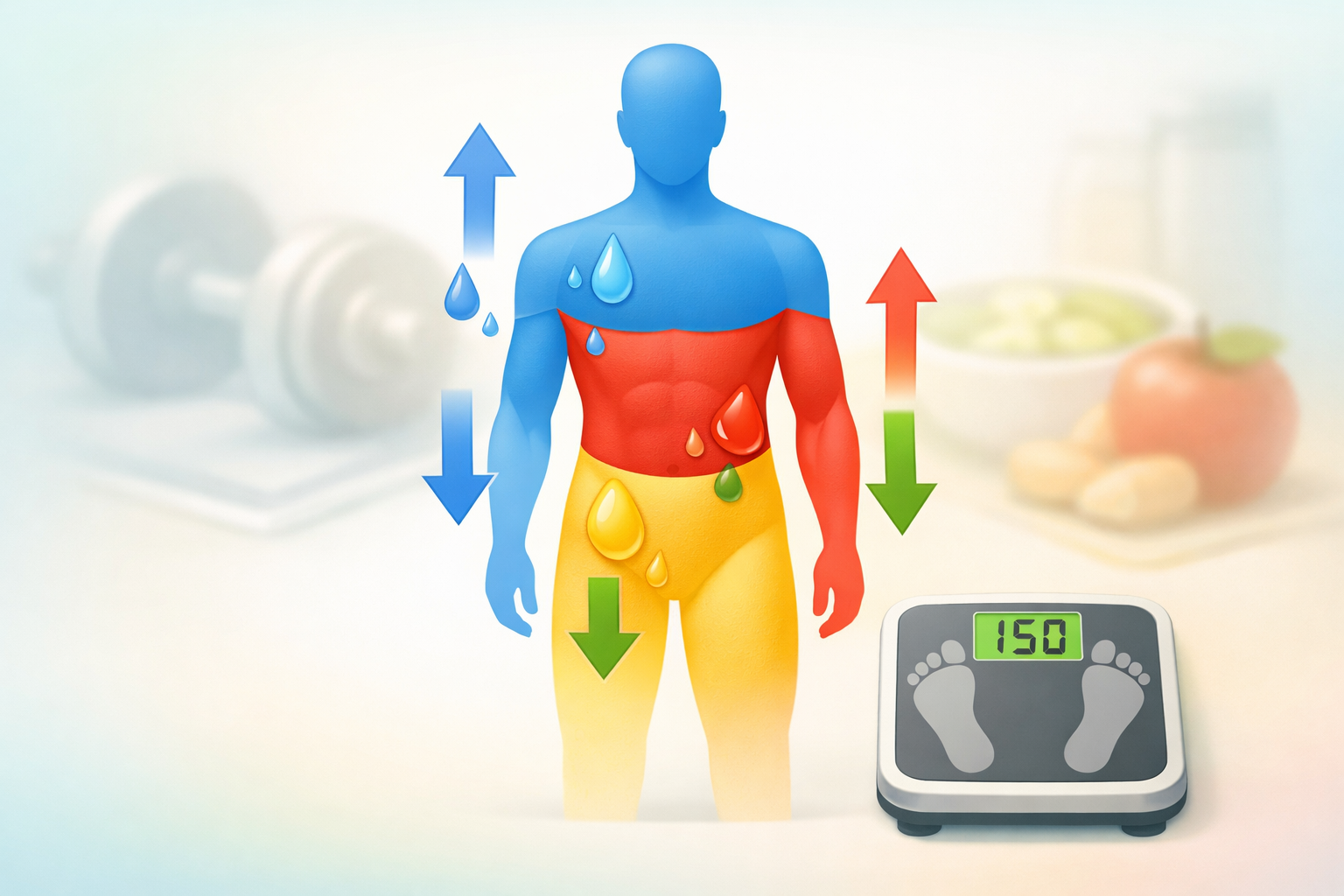
Common Reasons for a Stalled Scale
- Water Retention: Your body’s water levels change daily due to diet, exercise, salt intake, and even your menstrual cycle. A higher sodium intake, new exercise routine, or increased stress can cause your body to hold more water, masking fat loss.
- Muscle Gain: If you are strength training, you might be gaining muscle while losing fat. Muscle is denser than fat, so your body composition is improving even if the scale doesn’t reflect it. This is a good thing!
- Not a True Deficit: You might be eating more calories than you think. Small snacks, extra oil in cooking, or bigger portions can add up quickly. This is a very common reason.
- Metabolic Adaptation: When you consistently eat less, your body can adapt by burning fewer calories. This is a natural survival mechanism, making it harder to lose weight over time.
- Hormonal Changes: Issues with thyroid, insulin resistance, or high cortisol (stress hormone) can impact metabolism and make weight loss difficult despite a calorie deficit.
- Lack of Sleep: Poor sleep messes with hunger and satiety hormones, making you crave high-calorie foods and store more fat.
- Hidden Calories: Sugary drinks, sauces, cooking oils, and condiments often contain more calories than you realize and can quickly add up.
- Measuring Errors: If you are not using a food scale, you might be guessing portion sizes wrong. This is a big problem for many people.
If you find your weight is stuck, consider if you are truly in a deficit. Sometimes, our perception of “eating less” is not the same as the actual calorie count. For help with tracking, you can read our article on How Many Calories Should I Eat Daily?.
Are You Truly in a Calorie Deficit?
Often, when someone wonders “why am i in a deficit but not losing weight,” the simplest answer is that they might not actually be in a calorie deficit. It is very easy to eat more calories than you think, even with good intentions.
Many people guess their food portions. They do not weigh or measure things. A “small handful” of nuts can be double the actual serving size. A “splash” of oil in cooking can be 100 or more extra calories. These small things add up fast. They can turn a planned deficit into a maintenance or even surplus day without you knowing.
Think about drinks too. Sweetened coffee, juice, or sodas have many calories. These calories do not make you feel full like solid food. So, you drink them and still eat your normal meal. This adds a lot of hidden calories. Even healthy foods, like avocados or olive oil, are very high in calories. Eating a bit too much of them can cancel out your deficit.
For example, I remember a friend who was very frustrated. He was eating what he thought was a healthy salad every day. But he used a lot of dressing, cheese, and crunchy toppings. When he finally measured everything, he found his “healthy” salad was over 800 calories! He was not in a deficit at all. He realized then the importance of checking his food intake more carefully.

How to Check Your Actual Calorie Intake
- Weigh Your Food: Use a food scale for everything. This is the most accurate way. Guessing portion sizes is often wrong. One serving of chicken might be 4 ounces, but if you scoop 6 ounces, that’s an extra 50% calories.
- Track Everything: Write down or use an app for every single bite, sip, and condiment. This helps you see where hidden calories are coming from. Do not forget snacks, sauces, and cooking oils.
- Read Labels Carefully: Understand serving sizes on food packages. A bag of chips might say “2 servings,” but many people eat the whole bag without thinking.
- Be Honest: It is easy to forget a small treat or a “cheat” meal. For accurate tracking, you must include everything. No one is judging you, this information is just for you.
- Review Your Tracking: After a week, look at your food log. Are there patterns? Are you always adding extra cheese or a second helping without logging it?
- Calculate Your TDEE Again: Your Total Daily Energy Expenditure (TDEE) can change as you lose weight or become more active. Recalculating helps ensure your deficit is still correct. Learn more about recalculating your TDEE for plateaus here.
- Consider “Calorie Creep”: Over time, you might slowly add back small amounts of food, making your deficit shrink. Regular checks prevent this.
It is surprising how much difference a few hundred extra calories can make. A small “deficit” of 100-200 calories might be easily wiped out by inaccurate tracking. A true deficit needs careful counting, especially if your weight is not changing. If you’re struggling to calculate your deficit, our guide on How to Calculate a Safe Calorie Deficit for Fat Loss can help.
Lifestyle Factors Affecting Weight Loss
Sometimes, even if your calorie counting is perfect, other things in your life stop weight loss, making you ask, “why am i in a deficit but not losing weight?”. These include how much you sleep, how stressed you are, and certain health issues. These factors impact your hormones, and hormones play a big role in your body’s ability to lose fat.
For example, when you do not sleep enough, your body makes more of a hormone called ghrelin, which makes you feel hungry. At the same time, it makes less leptin, which tells you that you are full. So, you feel hungrier and eat more without realizing it, or you crave unhealthy foods. Lack of sleep also raises cortisol, the stress hormone, which can make your body store more fat around your belly.
Stress works in a similar way. Always feeling stressed keeps cortisol levels high. This not only encourages fat storage but also affects your metabolism, making it slower. It can also lead to emotional eating, where you eat not because you are hungry but because you are stressed or sad.
I recall a time when I was very busy with a big project. I was eating healthy and exercising, but my weight was not moving. I was sleeping only 4-5 hours a night and felt constantly stressed. I understood the science, but it was hard to apply to myself. Once the project finished, and I started sleeping 7-8 hours, my weight slowly began to drop without changing my diet much. It taught me that stress and sleep are very powerful.

Key Lifestyle Influences
- Sleep Quality: Aim for 7-9 hours of good sleep each night. Bad sleep disturbs hormones like ghrelin and leptin, making you hungrier and less satisfied. It also increases cortisol, which promotes fat storage.
- Stress Management: High stress keeps cortisol levels up. This hormone can make your body hold onto fat, especially around the middle. Find ways to relax, like meditation, walking, or hobbies.
- Medical Conditions: Certain conditions, such as an underactive thyroid (hypothyroidism), Polycystic Ovary Syndrome (PCOS), or insulin resistance, can slow metabolism and make weight loss very hard. If you suspect these, talk to a doctor.
- Medications: Some medicines can cause weight gain or make it harder to lose weight. Check with your doctor if any of your medications could be affecting your progress.
- Gut Health: Your gut bacteria influence how you digest food and absorb nutrients. An unhealthy gut might affect weight management. Eating more fiber and fermented foods can help.
- Consistency: Weight loss is not just about a few good days. It needs steady effort over weeks and months. Skipping workouts or having many “cheat” meals can disrupt progress.
- Non-Exercise Activity Thermogenesis (NEAT): This is the energy you burn from non-exercise movements, like walking, fidgeting, and standing. If your NEAT drops because you are tired or stressed, your total calorie burn goes down.
Remember, a holistic view of your health is important. It is not just about calories in and calories out. Your body’s internal environment plays a big part. If you have hit a plateau, consider reading our article on How to Restart Weight Loss After a Plateau (9 Fixes).
How Can I Break My Weight Loss Plateau?
To break a weight loss plateau when you are in a deficit but not losing weight, you need to make small, smart changes. This could mean being stricter with tracking your food, increasing your daily movement, or looking at your sleep and stress levels.
Sometimes, a “diet break” can also help. This means eating at maintenance calories for a week or two. This can give your body and mind a break and reset hormones, making it easier to lose weight when you return to a deficit.
Let me give you an example. My cousin was stuck at a certain weight for weeks. He was very careful with his food. I told him to try adding 200-300 calories for a week, aiming for his maintenance level, not more. He was scared to do it, thinking he would gain weight. But after a week, he went back to his deficit, and within a few days, the scale started moving again. His body simply needed a small reset.
Strategies to Overcome a Plateau
- Refine Your Calorie Tracking: Go back to basics. Weigh all your food. Track every single thing you eat and drink for at least a week. Many times, you will find hidden calories that you missed before.
- Increase Protein Intake: Protein makes you feel full longer and helps preserve muscle mass when you are in a deficit. It also has a higher thermic effect, meaning your body burns more calories digesting it.
- Boost Non-Exercise Activity Thermogenesis (NEAT): Find more ways to move throughout the day. Take the stairs, park further away, stand more often, or walk around while on calls. These small movements add up to more calories burned.
- Adjust Your Deficit (Carefully): If you are certain you are tracking correctly, you might need to slightly reduce your calories. However, do not go too low. A very big deficit can slow your metabolism too much. You can use our guide on How to Calculate a Safe Calorie Deficit for Fat Loss for reference.
- Re-evaluate Exercise Routine: If you only do cardio, consider adding strength training. If you only lift, add some cardio. Change your routine to challenge your body in new ways.
- Prioritize Sleep: Aim for 7-9 hours of quality sleep. Better sleep helps regulate hunger hormones and reduces stress, which aids in fat loss.
- Manage Stress: Find effective ways to lower your daily stress. This could be meditation, spending time in nature, or reading. High stress can lead to water retention and increased fat storage.
- Increase Water Intake: Sometimes dehydration can cause your body to hold onto water. Drink plenty of plain water throughout the day.
- Consider a Diet Break: If you have been in a deficit for a long time (more than 12-16 weeks), a 1-2 week break at maintenance calories can help reset your metabolism and hormones, making future fat loss easier. Then, you can return to your deficit. Our article on “Can your weight really get stuck while eating in a deficit?” provides more insights into this common issue.
Remember, patience is a big part of weight loss. Your body will not always respond linearly. Keep making consistent, small efforts, and the results will come.
When Should I Expect to See Weight Loss?
Usually, if you are in a real calorie deficit, you can expect to see weight loss over weeks, not days. The exact speed depends on your starting weight, how big your deficit is, and other body factors.
It is rare to see the scale drop every day. Your weight naturally goes up and down due to water, food in your stomach, and other things. So, looking at your weight every day can be misleading and frustrating. It is better to look at the trend over a week or even a month.
For someone with a lot of weight to lose, the initial drop can be fast, as their body sheds a lot of water. For someone closer to their goal, the loss will be slower, perhaps only 0.5 to 1 pound per week. This is normal.
I remember a conversation with an older gentleman, Mr. Sharma, who was trying to lose his last 10 pounds. He was very discouraged because the scale moved so slowly. I explained to him that at his age and with less fat to lose, his body would be more resistant. We focused on non-scale victories—how his pants fit, his energy levels, and his blood pressure improving. Over several months, he slowly reached his goal. The process was slow, but the changes were steady and lasting.
Realistic Expectations for Weight Loss
- Weekly Trends, Not Daily: Weigh yourself once a week, or take an average of daily weights over a week. Focus on the trend. If the trend is down, you are making progress.
- Slow and Steady Wins: For most people, a healthy and sustainable rate of fat loss is 0.5 to 2 pounds per week. This depends on your starting weight and body composition.
- Initial Water Loss: In the first week or two, you might see a faster drop due to water loss, especially if you reduce carbohydrate intake. This is not fat loss.
- Plateaus Are Normal: Your body will adapt. Periods where your weight does not change for a few weeks are normal. Do not get discouraged; it means you need to adjust something small.
- Focus on Non-Scale Victories: Pay attention to how your clothes fit, your energy levels, strength gains in the gym, and overall health improvements. These are important signs of progress that the scale does not show.
- Long-Term View: Think about weight loss as a long journey, not a short race. Consistent effort over months brings lasting results.
- Consider Body Fat Percentage: If you are strength training, your body composition might be changing (losing fat, gaining muscle) even if your weight stays the same. Measuring body fat can show true progress.
If you are consistently tracking your food, exercising, and managing lifestyle factors, but still see no change over 3-4 weeks, then it is time to re-evaluate your methods or consult a professional.
Conclusion
Understanding why you might be in a deficit but not losing weight means looking beyond just the calories. Your body is a complex system influenced by many factors: water, muscle, sleep, stress, and even small errors in tracking. It is common to feel frustrated, but remember that true progress often happens without the scale immediately showing it. Focus on consistency, make small, informed adjustments, and celebrate non-scale victories. If things still do not change, do not hesitate to seek advice from a doctor or a registered dietitian. Bio Friction is here to help you navigate your journey.
Related Reading
- How to Restart Weight Loss After a Plateau (9 Fixes)
- How to Calculate a Safe Calorie Deficit for Fat Loss
- Can your weight really get stuck while eating in a deficit?
FAQ
Why is my weight not going down even if I eat less?
Your weight might not drop even if you eat less due to water retention, gaining muscle, hidden calories in your food, or metabolic changes as your body adapts to fewer calories.
What are “hidden calories” and how do they stop weight loss?
Hidden calories are extra calories you eat without realizing, like those in cooking oils, sauces, sugary drinks, or snacks you forget to track. They can quickly cancel out your calorie deficit.
Can stress make it harder to lose weight even with a good diet?
Yes, high stress increases cortisol levels, which can lead to increased fat storage, especially around the belly, and can also impact your metabolism, making weight loss difficult.
How does lack of sleep affect weight loss?
Lack of sleep disturbs hormones that control hunger (ghrelin) and fullness (leptin), making you feel hungrier, crave unhealthy foods, and store more fat.
What is a “weight loss plateau” and how long does it last?
A weight loss plateau is when your weight stops dropping for several weeks despite being in a calorie deficit. It can last for a few weeks to a month or more, depending on individual body responses.
Should I weigh myself every day for weight loss?
It is better to weigh yourself once a week or track the trend over a week, as daily weight can fluctuate due to water retention and other factors, which can be misleading and discouraging.
What are “non-scale victories” in weight loss?
Non-scale victories are positive changes not related to the number on the scale, such as clothes fitting better, increased energy, improved mood, better sleep, or strength gains during exercise.
How much water should I drink for weight loss?
While there is no fixed amount, drinking plenty of water (around 8-10 glasses a day for most adults) can help with fullness, metabolism, and prevent your body from holding onto excess water.
