Is 1300 calories enough for weight loss? A 2026 Guide for Beginners
Last updated: March 3, 2026
Key Takeaways
- 1300 calories can trigger weight loss for many, but it is not a “one size fits all” number.
- Your height, weight, and daily movement determine if this amount is safe or too low.
- Eating too little can sometimes cause a weight loss plateau by slowing your metabolism.
- Focusing on protein and fiber helps you stay full while eating fewer calories.
- Always check if you are meeting your basic energy needs, known as BMR, before starting.
Quick Answer
Whether is 1300 calories enough for weight loss depends on your body size and activity level. For a small, sedentary person, it is often a safe and effective target. However, for taller individuals or those who exercise often, 1300 calories might be too low, leading to hunger and muscle loss.
I remember when I first started my fitness journey in Bangalore. I thought eating as little as possible was the only way to see the scale move. I tried sticking to a very strict plan, but I felt tired all the time. Many people ask me, “is 1300 calories enough for weight loss?” because it seems like a magic number found in many old diet books.
In my years of studying engineering and body mechanics, I learned that the human body is like a machine. If you do not give it enough fuel, it starts to shut down non-essential parts. Before you jump into a low-calorie plan, you must understand how your specific body uses energy. You can check this citrusBurn Review to see how supplements might fit into a structured plan, but food is always your primary fuel.
Is 1300 calories enough for weight loss for everyone?
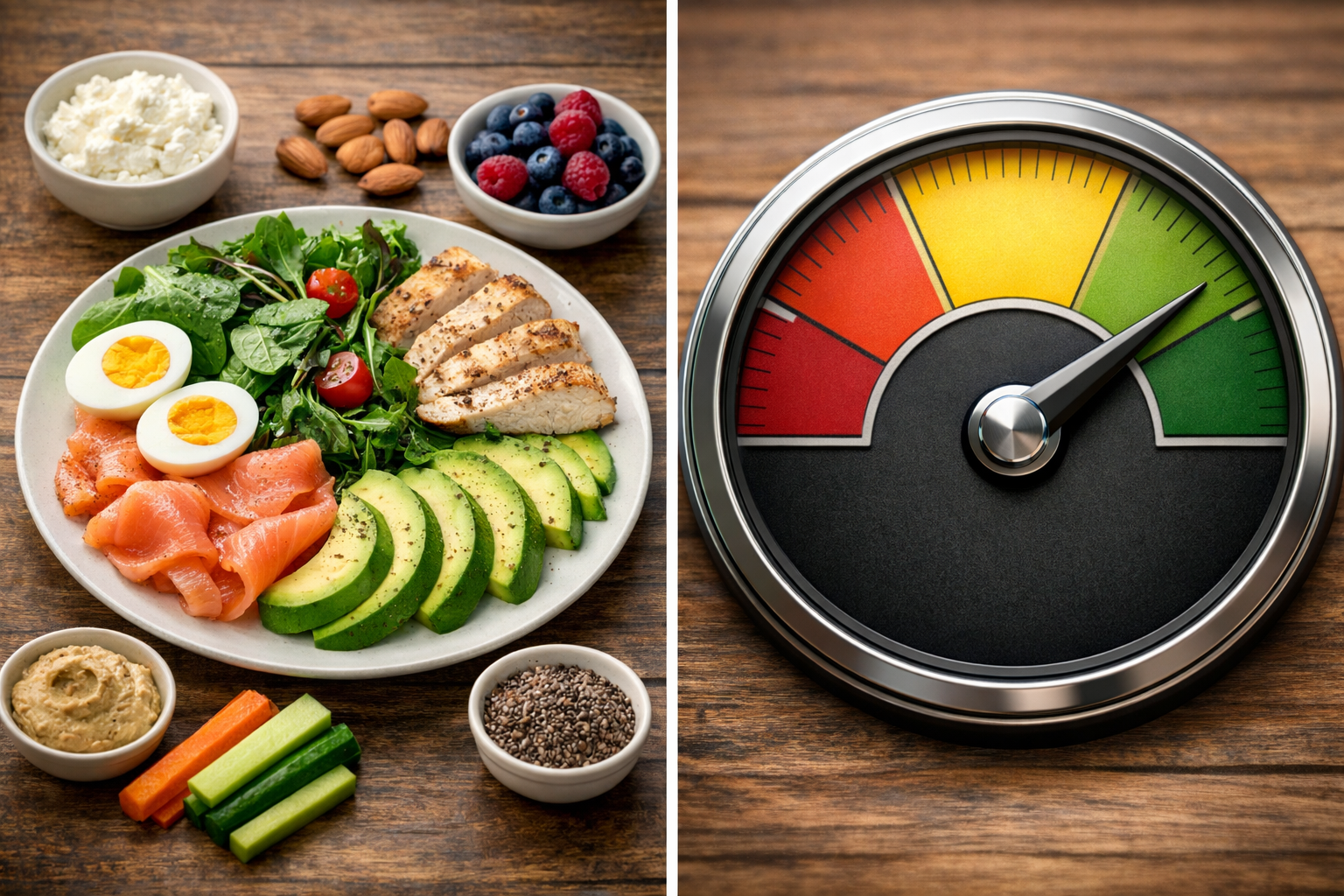
The short answer is no; it is not enough for everyone. While a 1300-calorie limit creates a energy gap for many adults, it can be risky for others. If your body needs 2000 calories just to breathe and exist, cutting down to 1300 might be too aggressive.
For a woman who is 5 feet tall and sits at a desk all day, 1300 calories might be a perfect “sweet spot.” It allows for a slow and steady loss of about 0.5 to 1 pound per week. But, if you are a 6-foot-tall man who hits the gym daily, 1300 calories is likely dangerous. Research from 2024 shows that eating below your Basal Metabolic Rate (BMR) for long periods can lead to bone loss and hair thinning.
- Choose 1300 calories if: You are small-framed, mostly inactive, and have consulted a doctor.
- Avoid 1300 calories if: You are very active, nursing, or have a high starting weight.
Common mistake: Many people pick a low number like 1300 because they want fast results. They forget that the most successful diet is the one you can actually follow for a year, not just a week. If you feel dizzy or constantly cold, your intake is likely too low. You might need to learn how to calculate a safe calorie deficit to find your true number.
How do I know if 1300 calories is right for my body?
To find out if is 1300 calories enough for weight loss for you, you must look at your Total Daily Energy Expenditure (TDEE). This is the total number of calories you burn in 24 hours. Usually, a safe weight loss plan involves eating 500 calories less than your TDEE.
If your TDEE is 1800 calories, then 1300 is a perfect 500-calorie deficit. But if your TDEE is 2500, eating only 1300 creates a 1200-calorie gap. This is too much. It can cause your body to enter “survival mode.” In 2025, several clinical observations noted that extreme deficits often lead to a rebound in weight because the hunger becomes too strong to fight.
| Feature | 1300 Calories is Good If… | 1300 Calories is Bad If… |
|---|---|---|
| Activity | You walk less than 5,000 steps. | You lift weights or run. |
| Height | You are under 5’4″. | You are over 5’8″. |
| Goal | Slow, steady fat loss. | Building muscle or “toning.” |
| Health | No history of eating issues. | You have a high-stress job. |
What happens to the metabolism on 1300 calories?
When you eat 1300 calories, your metabolism tries to match the energy you give it. This is called adaptive thermogenesis. If you eat very little, your body becomes “thrifty.” It starts burning fewer calories during daily tasks like brushing your teeth or fidgeting.
According to data from metabolic studies in 2025, individuals on very low calories often see a drop in their resting heart rate and body temperature. This is the body trying to save power. If you find your progress has stopped, you might need to adjust your TDEE for plateaus to get things moving again.
“A deficit that is too steep is like trying to drive a car from Chennai to Mumbai on half a tank of petrol. You might start fast, but you will eventually stall on the highway.” — Anonymous Engineering Scholar
Can 1300 calories cause a weight loss plateau?
Yes, it can. It sounds strange, but eating too little can stop weight loss. When you starve the body, it holds onto water and fat as a safety measure. Stress hormones like cortisol go up. High cortisol makes the body retain water, which hides fat loss on the scale.
If you have been eating 1300 calories and the scale has not moved in three weeks, you might be experiencing “metabolic adaptation.” This is a common reason why people ask if weight can get stuck while eating in a deficit. Sometimes, the fix is actually to eat slightly more for a few days to signal to your body that food is plenty.
What should a 1300 calorie meal plan look like?

If you decide that 1300 calories is your target, quality matters more than quantity. You cannot spend 1300 calories on soda and chips and expect to feel good. You need high-volume foods. These are foods that take up a lot of space in your stomach but have few calories, like spinach, cucumbers, and peppers.
A typical day might look like this:
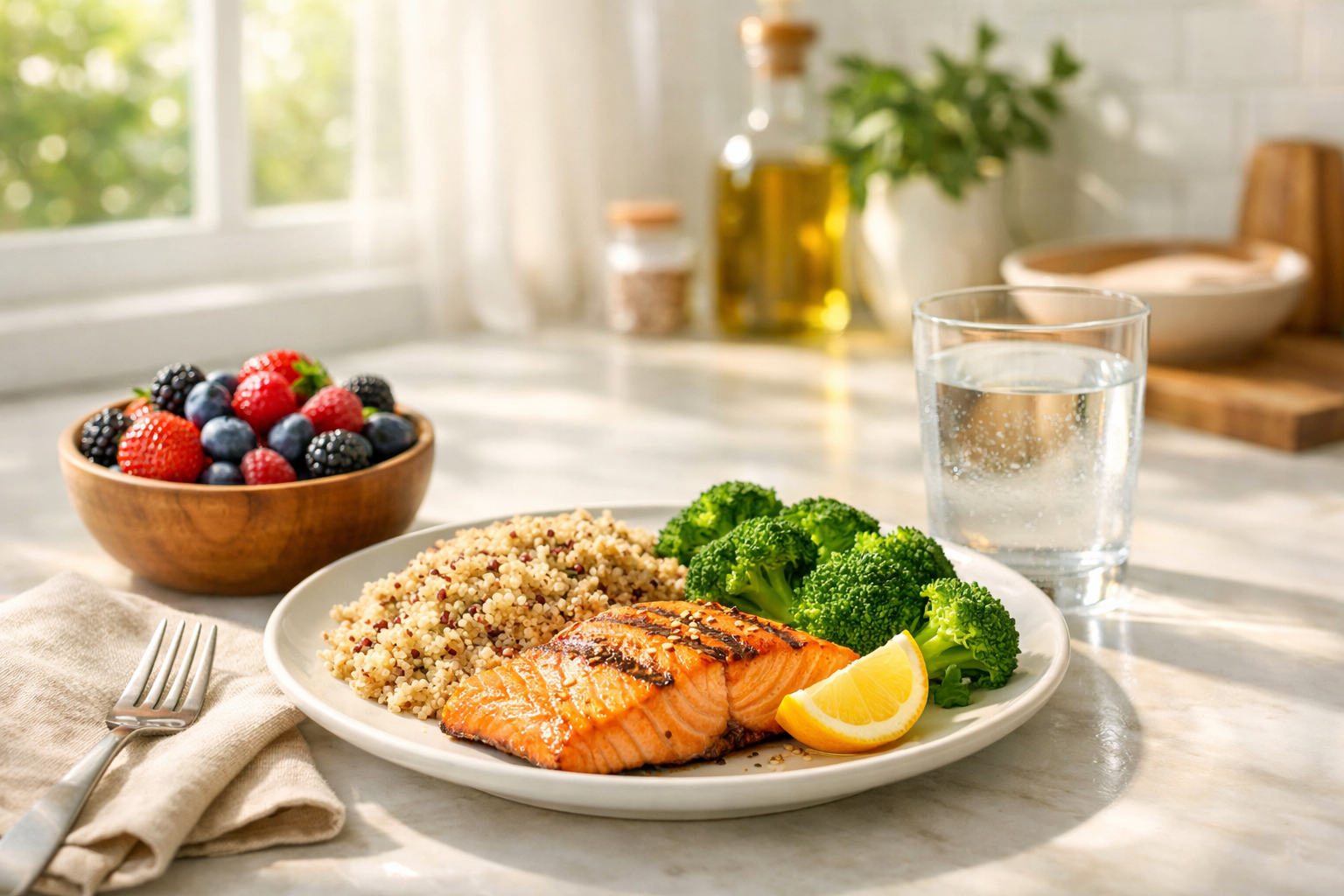
- Breakfast (300 cal): Two boiled eggs, one slice of whole-grain toast, and half an avocado.
- Lunch (400 cal): 150g of grilled chicken or paneer with a large green salad and a lemon dressing.
- Snack (100 cal): A small apple or a handful of almonds.
- Dinner (400 cal): A bowl of lentil soup (dal) with steamed cauliflower and a small portion of brown rice.
- Buffer (100 cal): A small piece of dark chocolate or a splash of milk in your tea.
By focusing on protein (like chicken, fish, or beans) at every meal, you keep your muscles safe. Protein also takes more energy to digest than fats or carbs.
Is 1300 calories enough for weight loss if I exercise?
This is where it gets tricky. If you are doing heavy lifting or cardio, 1300 calories is usually not enough. Your muscles need energy to repair themselves after a workout. Without enough food, your body might break down its own muscle for energy. This makes you “skinny fat”—you weigh less, but you don’t look firm.
If you exercise 3-4 times a week, you should likely aim for 1500-1600 calories. You can read more about how many calories to eat daily based on different activity levels. If you feel lightheaded during your workout, it is a clear sign from your brain that 1300 is too low.
How to track 1300 calories accurately?
Many people think they eat 1300 calories, but they actually eat 1800. Small things add up. A tablespoon of cooking oil has 120 calories. A handful of cashews has 160. If you don’t measure these, your “1300” is much higher.
Steps for accurate tracking:
- Use a digital kitchen scale for all solid foods.
- Measure oils and butters with a measuring spoon.
- Don’t forget to log “liquid calories” like juice or coffee creamers.
- Be honest about “bites, licks, and tastes” while cooking.
Accuracy is the only way to truly know if is 1300 calories enough for weight loss for your specific case. If you track perfectly for two weeks and lose nothing, your metabolism might be lower than the calculator predicted. In that case, you may need to look at warning signs that your deficit is too high.
Should you stop eating 1300 calories eventually?
You should not stay on 1300 calories forever. Once you reach your goal weight, you must slowly increase your food. This is called “reverse dieting.” If you go from 1300 calories straight back to 2500, you will gain the weight back very fast.
Increasing your calories by 100 each week helps your metabolism wake up without storing fat. This is the secret to how to stop dieting without rebounding. Stability is more important than the speed of the loss.
FAQs
Is 1300 calories too low for a woman?
It depends on her height and activity. For a short, sedentary woman, it is often safe. For a tall or active woman, it is likely too low and can cause hormonal issues.
Can I lose 2 pounds a week on 1300 calories?
Only if your maintenance calories are around 2300. However, losing weight that fast often leads to muscle loss instead of just fat loss.
What if I am hungry all the time on 1300 calories?
This means you are either eating the wrong foods (low fiber/protein) or your deficit is too large for your body’s needs.
Do I need to eat back calories burned during exercise?
Usually, no. Most fitness trackers overestimate calories burned. However, if you feel very weak, add 100-200 calories on gym days.
Why am I not losing weight on 1300 calories?
You might be underestimating your portions, or your body has adapted to the low intake. Check your tracking accuracy first.
Is 1300 calories safe for teenagers?
No. Teenagers are still growing and need much more energy for bone and brain development. Always consult a pediatrician.
Can I have a cheat meal on a 1300 calorie diet?
Yes, but a large cheat meal can easily wipe out your entire week’s deficit. It is better to include small treats daily within your 1300 limit.
Conclusion and Next Steps
To wrap up, is 1300 calories enough for weight loss? For many beginners, it is a workable starting point, but it requires careful planning. If you are small and not very active, it will likely work. If you are tall or love the gym, you need more food to stay healthy.
Your Action Plan:
- Calculate your BMR: Never eat below this number without medical supervision.
- Track for 7 days: See how you feel. If you are exhausted, add 200 calories.
- Prioritize Protein: Aim for at least 100g of protein to protect your muscles.
- Monitor non-scale wins: Are your clothes fitting better? Is your energy high? These matter as much as the scale.
- Plan your exit: Decide now that you will eventually move back to a maintenance level of eating.
Weight loss is a marathon, not a sprint. Be kind to your body, and it will reward you with better health in 2026.